
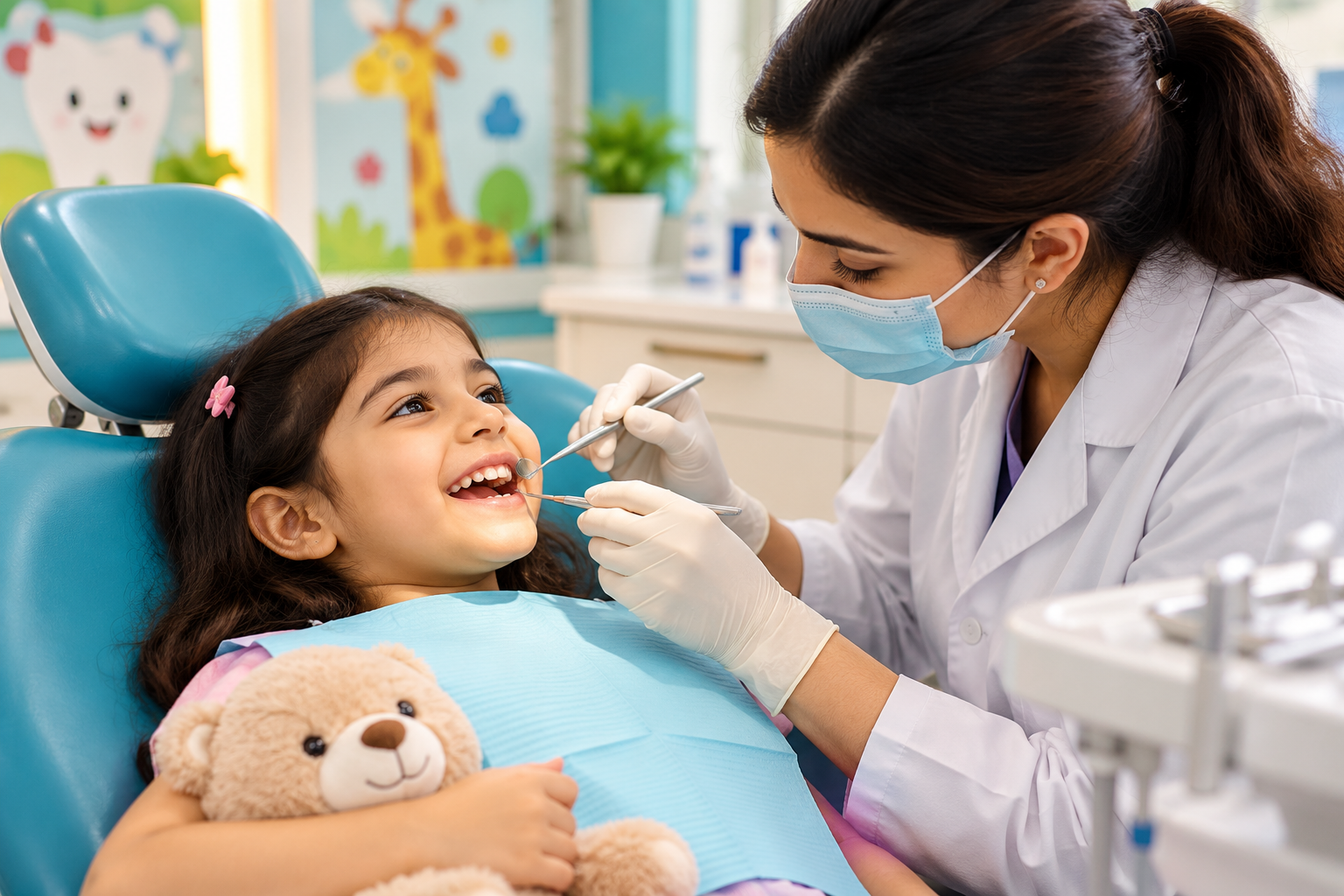
What Is Pediatric Dentistry?
Pediatric dentistry focuses on the oral health of infants, children and adolescents. It includes preventive dental care, diagnosis and treatment of dental problems, monitoring of tooth development and guidance for maintaining healthy oral habits as children grow.
At Dentistree Dental Clinic & Implant Center in Ulwe, pediatric dental care is planned according to the child’s age, dental development, oral health needs and individual comfort during treatment.
When Should Your Child Visit a Dentist?
Regular dental visits from an early age can help monitor tooth development, identify dental problems and establish healthy oral-care habits. A dental evaluation may also be needed whenever a child develops pain, swelling, tooth damage or other oral health concerns.
Preventive Visits
- Routine dental examinations
- Monitoring eruption and development of teeth
- Assessment of oral hygiene and brushing habits
- Evaluation of cavity risk
- Preventive treatments when clinically indicated
When a Problem Occurs
- Toothache or dental sensitivity
- Cavities or visible tooth damage
- Swelling or dental infection
- Broken or injured teeth
- Bleeding or swollen gums
- Problems with tooth eruption or development
Early evaluation can help identify dental problems before they become more extensive and allows treatment to be planned according to the child’s individual needs.
Common Dental Treatments for Children
Children may require different types of dental care depending on their age, tooth development and oral health. Treatment is selected after examining the child and identifying the specific dental problem.
Preventive & Basic Dental Care
- Routine dental check-ups
- Professional teeth cleaning when indicated
- Fluoride treatment
- Pit and fissure sealants
- Tooth-coloured fillings for cavities
- Oral hygiene and brushing guidance
Restorative & Other Dental Care
- Treatment of extensively decayed milk teeth
- Pulp therapy or pulpectomy when indicated
- Pediatric dental crowns
- Management of dental infections
- Management of broken or injured teeth
- Extraction of non-restorable teeth when necessary
- Evaluation of tooth eruption and developing bite problems
Preserving primary (milk) teeth when clinically appropriate can help maintain chewing function, speech, appearance and space for developing permanent teeth.
Why Are Milk Teeth Important?
Primary teeth, commonly called milk teeth, play an important role in a child’s oral development. Although they eventually fall out naturally, maintaining them in a healthy condition is important during childhood.
01 — Chewing & Nutrition
Healthy milk teeth help children chew food comfortably and support normal eating habits.
02 — Speech Development
Primary teeth contribute to the development of speech and pronunciation during childhood.
03 — Space for Permanent Teeth
Milk teeth help maintain space in the dental arch for developing permanent teeth.
04 — Oral Health & Comfort
Treating decay and infection helps reduce pain and supports a healthy oral environment while permanent teeth develop.
Untreated decay in a milk tooth can lead to pain, infection and difficulty eating. A pediatric dental evaluation helps determine whether the affected tooth can be restored or requires another treatment.
Dental Cavities in Children
Dental cavities are common in children and develop when tooth structure is damaged by acids produced by bacteria in dental plaque. Frequent exposure to sugary foods or drinks, inadequate brushing and other individual risk factors can increase the likelihood of tooth decay.
Signs Your Child May Have a Cavity
- Visible dark or white spots on a tooth
- A visible hole or damaged tooth surface
- Tooth sensitivity
- Pain while eating or drinking
- Toothache
- Food repeatedly getting stuck around a tooth
- Swelling near a decayed tooth
- Child avoiding chewing on one side
How Are Cavities in Children Treated?
Treatment depends on the depth of decay, condition of the tooth and whether the affected tooth is primary or permanent. Depending on the clinical findings, treatment may include preventive care, a dental filling, pulp therapy, a pediatric crown or extraction when a tooth cannot be predictably restored
Early treatment can help prevent decay from progressing to pain or infection and may allow more of the natural tooth structure to be preserved.
Preventive Dental Care for Children
Preventive dental care helps reduce the risk of cavities and supports healthy development of the teeth and gums. Preventive needs vary according to the child’s age, oral hygiene, diet and individual cavity risk.
At the Dental Clinic
- Regular dental examinations
- Professional cleaning when indicated
- Fluoride treatment when appropriate
- Pit and fissure sealants for suitable teeth
- Monitoring of tooth eruption and dental development
- Early identification of cavities and other dental problems
At Home
- Brush twice daily with age-appropriate fluoride toothpaste
- Supervise brushing until the child can brush effectively
- Clean between teeth where appropriate
- Limit frequent sugary snacks and drinks
- Encourage water as the routine drink
- Maintain regular dental visits as advised
Preventive care is most effective when professional dental care is combined with consistent oral hygiene and healthy dietary habits at home.
Dental Anxiety & Child-Friendly Dental Visits
Helping Children Feel Comfortable at the Dentist
Some children may feel nervous or uncertain about dental visits, particularly during their first appointment or when treatment is required. A calm, age-appropriate approach can help children gradually become more comfortable with the dental environment.
Pediatric dental visits can include simple explanations, familiarization with dental instruments and gradual introduction to treatment according to the child’s age, cooperation and individual needs.
How Parents Can Help
- Speak positively about dental visits
- Avoid using frightening words about injections, pain or drilling
- Keep explanations simple and age appropriate
- Avoid sharing negative personal dental experiences
- Encourage the child without promising that treatment will involve no discomfort
At the Dental Visit
- Allow time for the child to become familiar with the environment
- Explain procedures in child-friendly language
- Introduce treatment gradually when appropriate
- Use positive reinforcement
- Adapt the appointment according to the child’s cooperation and treatment need
Every child responds differently to dental treatment. The approach may be modified according to the child’s age, previous dental experiences, anxiety level and complexity of treatment.
Frequently Asked Questions About Pediatric Dental Care
A child’s first dental visit is generally recommended when the first tooth appears or by around the first birthday. Early visits can help assess dental development, oral hygiene and cavity risk.
Yes, cavities in primary teeth may require treatment depending on their extent and the condition of the tooth. Untreated decay can lead to pain, infection and difficulty eating, and may affect the health of the surrounding tissues.
A persistent toothache should be evaluated by a dentist. The cause may include tooth decay, infection, dental trauma or another oral condition, and treatment depends on the clinical findings.
Regular brushing with age-appropriate fluoride toothpaste, appropriate supervision, limiting frequent sugary foods and drinks, and regular dental examinations can help reduce the risk of tooth decay.
Dental anxiety is common in children. A calm, gradual and age-appropriate approach can help the child become familiar with the dental environment and improve cooperation over time.
Why Choose Dentistree for Pediatric Dental Care in Ulwe?
At Dentistree Dental Clinic & Implant Center in Ulwe, Navi Mumbai, pediatric dental care is planned according to the child’s age, dental development, oral health needs and individual comfort. The focus is on preventive care, early identification of dental problems and appropriate treatment when required.
Child-Focused Dental Care
Dental visits are adapted according to the child’s age, cooperation, previous dental experiences and individual treatment needs.
Preventive & Restorative Care
Care may include dental examinations, cavity prevention, fillings, pulp therapy, pediatric crowns and other treatment when clinically indicated.
Dental Development Monitoring
Tooth eruption, oral habits and developing dental problems can be monitored as the child grows.
Looking for other dental care options for your family? Explore our Dental Treatments & Services in Ulwe, including preventive, restorative, orthodontic and other dental treatments.
Looking for a Pediatric Dentist in Ulwe?
Schedule a dental consultation at Dentistree Dental Clinic & Implant Center in Ulwe, Navi Mumbai for your child’s dental examination, preventive care or treatment of dental problems.