
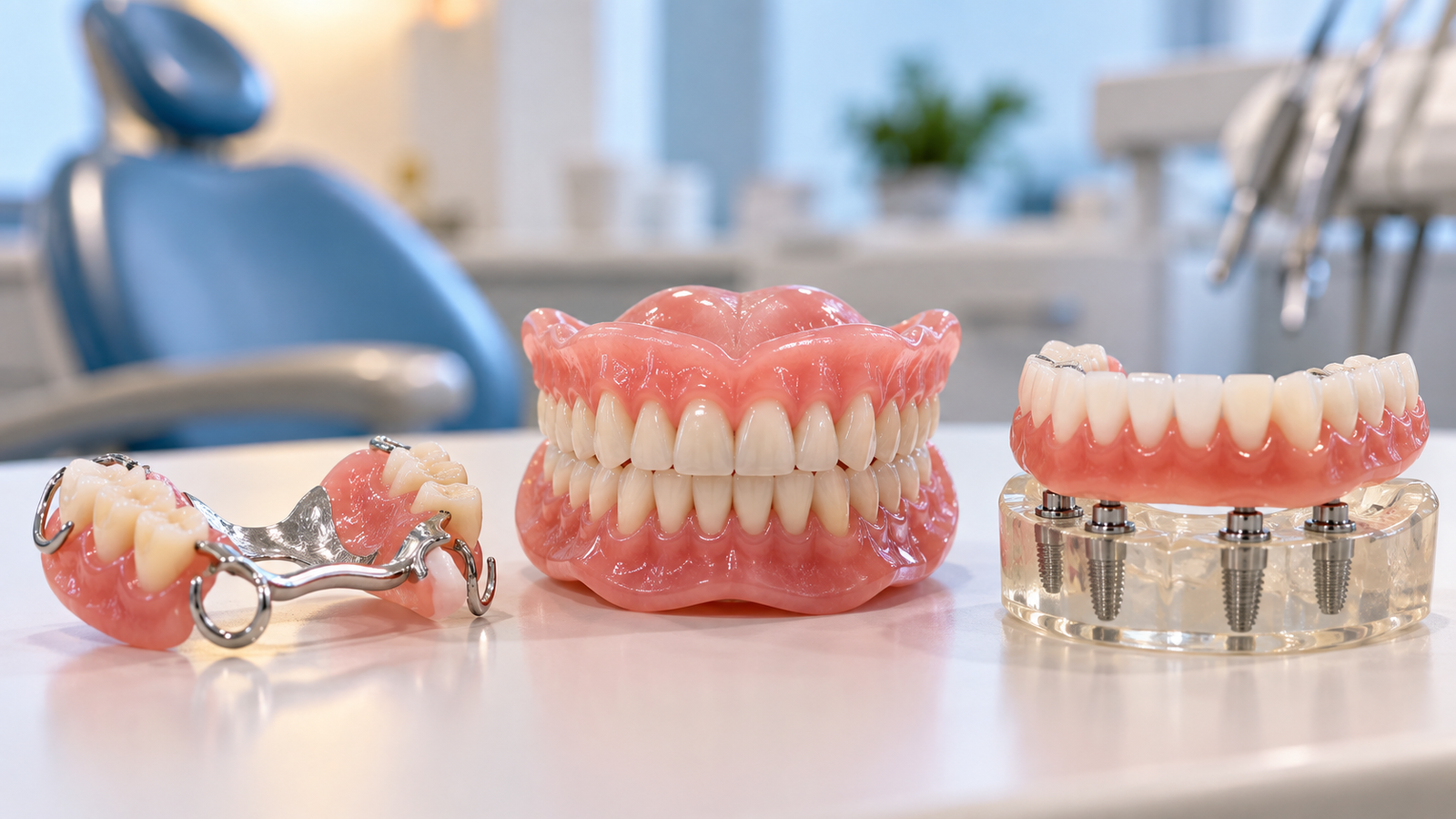
What Are Dentures?
Dentures are removable dental prostheses designed to replace missing teeth and surrounding tissues. They can be used when several teeth are missing or when all teeth in the upper jaw, lower jaw or both jaws need replacement.
At Dentistree Dental Clinic & Implant Center in Ulwe, denture treatment is planned after evaluating the remaining teeth, gums, jaw structure, bite and individual functional needs. The type of denture recommended depends on the number and location of missing teeth and the condition of the supporting oral tissues.
Types of Dentures
Different types of dentures are available depending on how many teeth are missing, the condition of the remaining teeth and gums, and the amount of support available. A dental examination helps determine which option is appropriate for an individual patient.
01 — Complete Dentures
Complete dentures replace all missing teeth in the upper jaw, lower jaw or both jaws. They are supported primarily by the gums and underlying tissues.
02 — Removable Partial Dentures
Partial dentures replace several missing teeth while retaining the remaining natural teeth. Depending on the design, they may use clasps or other components for support and retention.
03 — Implant-Supported Dentures
Dental implants can provide additional support and retention for certain dentures. Suitability depends on factors such as oral health, available bone and individual treatment requirements.
Each type of denture has different indications, advantages and limitations. Treatment planning considers oral health, function, comfort, appearance and the condition of the supporting structures.
Who May Need Dentures?
Dentures may be considered when multiple or all teeth are missing and tooth replacement is needed to improve oral function and appearance. The appropriate treatment depends on the number of missing teeth, condition of the remaining teeth and overall oral health.
Dentures May Be Considered For
- Multiple missing teeth
- Complete loss of teeth in one or both jaws
- Remaining teeth that cannot be predictably restored
- Difficulty chewing because of extensive tooth loss
- Patients requiring a removable tooth-replacement option
Factors Considered Before Treatment
- Health of the gums and oral tissues
- Condition of remaining natural teeth
- Jawbone and supporting structures
- Bite and available space
- Previous denture experience
- Individual functional and aesthetic requirements
A clinical examination and appropriate dental imaging, when required, help determine whether a complete denture, partial denture, implant-supported option or another tooth-replacement treatment is suitable.
How Are Dentures Made?
Denture fabrication involves several clinical and laboratory stages to create a prosthesis that fits the supporting tissues and is planned for appropriate function, comfort and appearance. The exact number of appointments can vary according to the type of denture and individual treatment requirements.
01 — Dental Examination
The gums, remaining teeth, jaw relationship and supporting oral tissues are evaluated before treatment planning.
02 — Impressions & Measurements
Dental impressions and appropriate measurements are taken to record the oral structures and help plan the denture.
03 — Trial & Evaluation
A trial stage may be used to assess tooth position, appearance, bite and other relevant factors before the denture is finalized.
04 — Denture Delivery & Adjustment
The completed denture is fitted and evaluated. Adjustments may be required as the mouth adapts to the new prosthesis.
Follow-up appointments are important because areas of pressure or discomfort may require adjustment, particularly during the initial period of wearing a new denture.
Getting Used to New Dentures
New dentures can feel different during the initial adjustment period. Some patients may notice temporary changes in speaking, chewing, saliva production or the way the denture feels against the gums.
Adaptation varies from person to person. Follow-up visits allow the fit to be checked and areas causing excessive pressure or discomfort to be adjusted when necessary.
Eating With New Dentures
- Begin with softer foods when necessary
- Cut food into smaller pieces
- Chew slowly and carefully
- Gradually introduce firmer foods as comfort improves
- Avoid very hard or sticky foods during the initial adjustment period
Speaking & Comfort
- Practice speaking and reading aloud
- Mild initial soreness may occur
- Dentures may initially feel bulky or unfamiliar
- Do not attempt to adjust the denture yourself
- Contact the clinic if persistent pain or sore spots develop
Persistent pain, significant looseness or difficulty using the denture should be evaluated rather than simply tolerated.
How to Clean and Care for Dentures
Proper denture hygiene helps keep the prosthesis clean and supports the health of the gums and other oral tissues. Dentures and the mouth should be cleaned regularly according to the instructions provided by your dentist.
Daily Denture Care
- Remove and rinse dentures after meals when practical
- Clean dentures regularly using an appropriate denture-cleaning method
- Handle dentures carefully to avoid dropping or damaging them
- Clean the gums, tongue and remaining natural teeth
- Clean around clasps and supporting teeth carefully with partial dentures
Protecting Your Dentures
- Avoid using very hot water that may affect the denture material
- Do not use abrasive household cleaners
- Store removable dentures appropriately when not being worn
- Do not attempt to repair or reshape dentures yourself
- Attend dental appointments if the denture becomes loose, damaged or uncomfortable
Even patients with complete dentures should continue regular dental examinations so the gums, oral tissues and denture fit can be evaluated.
Dentures vs Dental Implants: What’s the Difference?
Dentures and dental implants can both be used to replace missing teeth, but they differ in how they are supported and used. The appropriate option depends on oral health, available bone, number of missing teeth, treatment requirements and individual preferences.
Removable Dentures
- Removable tooth-replacement option
- Can replace several or all missing teeth
- Primarily supported by oral tissues and/or remaining teeth, depending on the design
- Do not require implant placement for conventional dentures
- May require adjustments as oral tissues change over time
Dental Implants
- Implants are placed in the jawbone to support replacement teeth
- Can support individual crowns, bridges or certain dentures
- Require assessment of bone and surrounding tissues
- Involve a surgical component
- Treatment planning and healing requirements vary between patients
For some patients, dental implants may also be used to improve the support and retention of a denture. Learn more about Dental Implants in Ulwe.
How Long Do Dentures Last?
The lifespan of a denture varies depending on the denture material, daily use, oral hygiene, changes in the gums and jawbone, and how well the denture is maintained.
Over time, the shape of the gums and supporting tissues can change, which may affect denture fit and stability. A denture that previously fitted well may eventually become loose or uncomfortable and require professional evaluation.
When Should a Denture Be Checked?
- Denture becomes loose or unstable
- Persistent sore spots or gum irritation develop
- Difficulty chewing or speaking increases
- Denture becomes cracked, chipped or damaged
- Bite feels different than before
- Partial denture clasps or supporting areas become problematic
- Denture no longer fits comfortably
Depending on the clinical findings, a denture may require adjustment, relining, repair or replacement. Regular dental examinations help determine when these changes are necessary.
Frequently Asked Questions About Dentures
Complete dentures replace all teeth in an upper or lower dental arch, while partial dentures replace several missing teeth and work alongside the remaining natural teeth.
Eating with new dentures usually requires an adjustment period. Starting with softer foods, smaller pieces and gradual progression to firmer foods can help while you become accustomed to the denture.
Wearing instructions can vary according to the type of denture and individual oral condition. Your dentist can advise when the denture should be removed and how it should be stored and cleaned.
Dentures can become loose as the gums and supporting tissues change over time. A loose denture should be professionally evaluated to determine whether adjustment, relining, repair or replacement is appropriate.
In suitable patients, dental implants can be used to provide additional support and retention for certain types of dentures. Clinical and radiographic evaluation is required to determine whether an implant-supported option is appropriate.
Why Choose Dentistree for Dentures in Ulwe?
At Dentistree Dental Clinic & Implant Center in Ulwe, Navi Mumbai, denture treatment is planned after evaluating the remaining teeth, gums, jaw relationship, supporting tissues and individual functional needs. The aim is to provide an appropriate tooth-replacement option based on each patient’s clinical condition.
Individualized Denture Planning
Complete, partial or implant-supported denture options are considered according to the number of missing teeth, oral condition and individual treatment requirements.
Fit, Function & Appearance
Denture design considers fit, bite, chewing function, comfort and appearance according to the individual clinical situation.
Follow-Up & Adjustments
Follow-up appointments allow denture fit and oral tissues to be evaluated and adjustments to be made when required.
Looking for other tooth-replacement and dental care options? Explore our Dental Treatments & Services in Ulwe, including dental implants, crowns and bridges, root canal treatment and preventive dental care.
Looking for Dentures in Ulwe?
Schedule a dental consultation at Dentistree Dental Clinic & Implant Center in Ulwe, Navi Mumbai to evaluate your oral condition and discuss suitable complete, partial or implant-supported denture options.