
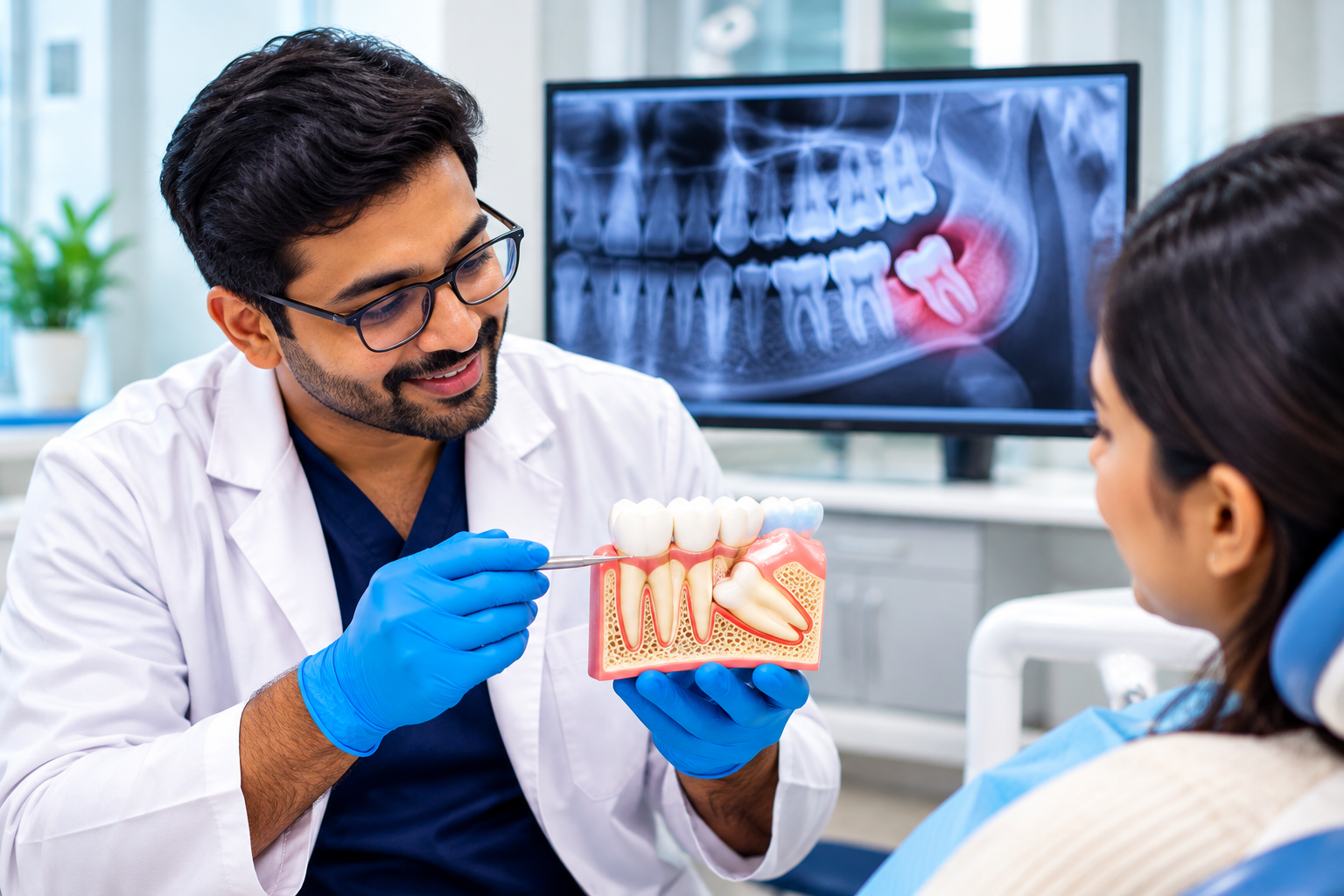
What Is Wisdom Tooth Extraction?
Wisdom tooth extraction is a dental procedure used to remove one or more third molars when they are causing problems or are likely to affect surrounding teeth and tissues. Wisdom teeth may be fully erupted, partially erupted or impacted beneath the gum or bone.
At Dentistree Dental Clinic & Implant Center in Ulwe, wisdom teeth are evaluated clinically and with appropriate dental imaging before extraction is planned. The treatment approach depends on the position of the tooth, surrounding structures, symptoms and individual clinical requirements.
When Does a Wisdom Tooth Need Removal?
Wisdom tooth removal may be considered when a third molar is causing pain, infection, damage to nearby structures or other dental problems. Not every wisdom tooth requires extraction, so clinical and radiographic evaluation is important.
- Recurrent pain or swelling around a wisdom tooth
- Partially erupted wisdom tooth with repeated gum inflammation
- Tooth decay that cannot be predictably restored
- Infection around the wisdom tooth
- Difficulty maintaining oral hygiene around the tooth
- Impacted or improperly positioned wisdom tooth
- Damage or increased risk to the neighbouring tooth
- Certain cysts or other pathology associated with the tooth
- Wisdom tooth contributing to other clinically identified problems
- Extraction recommended as part of an individual dental treatment plan
The decision to remove a wisdom tooth is based on symptoms, tooth position, dental imaging, surrounding structures and the potential risks and benefits of treatment.
Types of Wisdom Tooth Impaction
An impacted wisdom tooth is one that does not erupt completely into its normal position. The direction and depth of impaction can influence symptoms, treatment planning and the complexity of removal.
01 — Mesioangular Impaction
The wisdom tooth is tilted forward toward the neighbouring second molar.
02 — Vertical Impaction
The wisdom tooth remains relatively upright but may be partially or completely trapped beneath the gum or bone.
03 — Horizontal Impaction
The wisdom tooth lies more horizontally and may be directed toward the adjacent tooth.
04 — Distoangular Impaction
The wisdom tooth is angled backward, away from the neighbouring second molar.
Dental imaging helps determine the position of an impacted wisdom tooth and its relationship with neighbouring teeth, bone and other important anatomical structures.
Wisdom Tooth Extraction Procedure
Wisdom tooth extraction is planned according to the position of the tooth, surrounding bone, nearby structures and the complexity of the case. The exact procedure can vary between a fully erupted wisdom tooth and an impacted wisdom tooth.
01 — Clinical & Radiographic Evaluation
The wisdom tooth, surrounding gums and neighbouring teeth are examined, and appropriate dental imaging is used for treatment planning.
02 — Local Anaesthesia
Local anaesthesia is administered to numb the treatment area before the extraction procedure begins.
03 — Tooth Removal
Depending on the tooth position, a straightforward extraction may be performed, or surgical access may be required for an impacted wisdom tooth.
04 — Post-Extraction Care
After removal, the extraction site is managed appropriately and post-operative instructions are provided to support healing.
Surgical steps and recovery can vary depending on the depth and position of the wisdom tooth and individual clinical factors.
What to Expect After Wisdom Tooth Extraction
Some discomfort, swelling and tenderness can occur after wisdom tooth extraction, particularly following surgical removal of an impacted tooth. The amount and duration vary depending on the complexity of the procedure and individual healing response.
Following the post-operative instructions provided by your dentist is important for protecting the extraction site and supporting normal healing.
Aftercare Following Wisdom Tooth Removal
- Bite on the gauze as instructed to help control bleeding
- Avoid vigorous rinsing or spitting during the initial healing period
- Choose soft foods and maintain adequate hydration
- Avoid smoking, tobacco and using straws during early healing
- Keep the mouth clean according to the instructions provided
- Take prescribed or recommended medicines only as directed
- Avoid disturbing the extraction site with your fingers or tongue
- Attend the recommended follow-up appointment
Contact your dentist if you experience persistent or worsening pain, excessive bleeding, increasing swelling, fever, difficulty swallowing or other concerning symptoms after extraction.
Is Wisdom Tooth Extraction Painful?
Wisdom tooth extraction is generally performed under local anaesthesia to numb the treatment area and minimize discomfort during the procedure. Patients may feel pressure or movement while the tooth is being removed, but the experience varies depending on the position and complexity of the tooth.
After the anaesthesia wears off, temporary pain, swelling or tenderness may occur. The intensity and duration can vary, particularly between a straightforward extraction and surgical removal of an impacted wisdom tooth.
Managing Discomfort After Extraction
- Follow the post-operative instructions provided
- Take recommended or prescribed medicines as directed
- Use a cold pack externally if advised
- Eat soft foods during the initial recovery period
- Avoid strenuous activity during early healing
- Contact the clinic if pain becomes severe or progressively worsens
Increasing pain several days after extraction, particularly when accompanied by an unpleasant taste or odour, may require dental evaluation.
What Is Dry Socket After Tooth Extraction?
Dry socket, also called alveolar osteitis, is a complication that can occur after a tooth extraction when the blood clot at the extraction site is lost or breaks down before normal healing has progressed sufficiently.
It can cause significant pain that may develop or worsen a few days after extraction and may radiate toward the ear, temple or jaw. An unpleasant taste or odour may also occur.
How Can the Risk of Dry Socket Be Reduced?
- Follow the post-extraction instructions carefully
- Avoid smoking and tobacco during healing
- Avoid vigorous rinsing or spitting during the early healing period
- Avoid drinking through a straw initially
- Do not disturb the extraction site
- Maintain oral hygiene as instructed
If pain becomes severe or worsens after initially improving, contact your dentist for evaluation. Dry socket requires professional assessment and appropriate management.
Wisdom Tooth Extraction vs Routine Tooth Extraction
Tooth extraction procedures vary depending on the position, condition and accessibility of the tooth. A fully erupted tooth may sometimes be removed with a routine extraction, while an impacted wisdom tooth may require a surgical approach.
Routine Tooth Extraction
- Generally involves a fully erupted and accessible tooth
- May be considered for severely damaged or non-restorable teeth
- Usually involves loosening and removing the tooth from its socket
- Procedure depends on the condition and shape of the tooth and roots
Wisdom Tooth / Surgical Extraction
- May involve a partially erupted or impacted wisdom tooth
- Surgical access may be required in selected cases
- Bone removal or sectioning of the tooth may sometimes be necessary
- Treatment planning considers nearby teeth and anatomical structures
A clinical examination and appropriate dental imaging help determine the type of extraction required for each tooth.
Frequently Asked Questions About Wisdom Tooth Extraction
No. Not every wisdom tooth requires extraction. Removal may be considered when a wisdom tooth causes pain, recurrent infection, decay, damage to neighbouring structures or other clinically identified problems.
Recovery varies depending on whether the extraction was straightforward or surgical, the position of the tooth and individual healing. Swelling, tenderness and discomfort may occur during the initial healing period.
Soft foods are generally preferred during the initial recovery period. Avoid very hard, crunchy or irritating foods near the extraction site and follow the dietary instructions provided after treatment.
An impacted wisdom tooth is one that has not fully erupted into its normal position and may remain partially or completely covered by gum or bone. Dental imaging helps determine its position and relationship with surrounding structures.
Contact your dentist if you experience persistent or worsening pain, excessive bleeding, increasing swelling, fever, difficulty swallowing or other concerning symptoms after the procedure.
Why Choose Dentistree for Wisdom Tooth Extraction in Ulwe?
At Dentistree Dental Clinic & Implant Center in Ulwe, Navi Mumbai, wisdom tooth extraction is planned after evaluating the tooth position, symptoms, surrounding tissues and appropriate dental imaging. The treatment approach is selected according to the individual clinical situation and complexity of the extraction.
Clinical & Radiographic Evaluation
The wisdom tooth and surrounding structures are evaluated clinically and with appropriate dental imaging before treatment planning.
Individualized Extraction Planning
The extraction approach is selected according to the tooth position, level of impaction, surrounding structures and individual clinical requirements.
Post-Extraction Care
Detailed aftercare instructions and appropriate follow-up are provided to support healing after wisdom tooth removal.
Looking for other dental care options? Explore our Dental Treatments & Services in Ulwe, including dental implants, root canal treatment, braces, crowns and preventive dental care.
Schedule a dental consultation at Dentistree Dental Clinic & Implant Center in Ulwe, Navi Mumbai for evaluation of a painful, impacted or problematic wisdom tooth and discussion of the appropriate treatment options.